

Iran on Fire

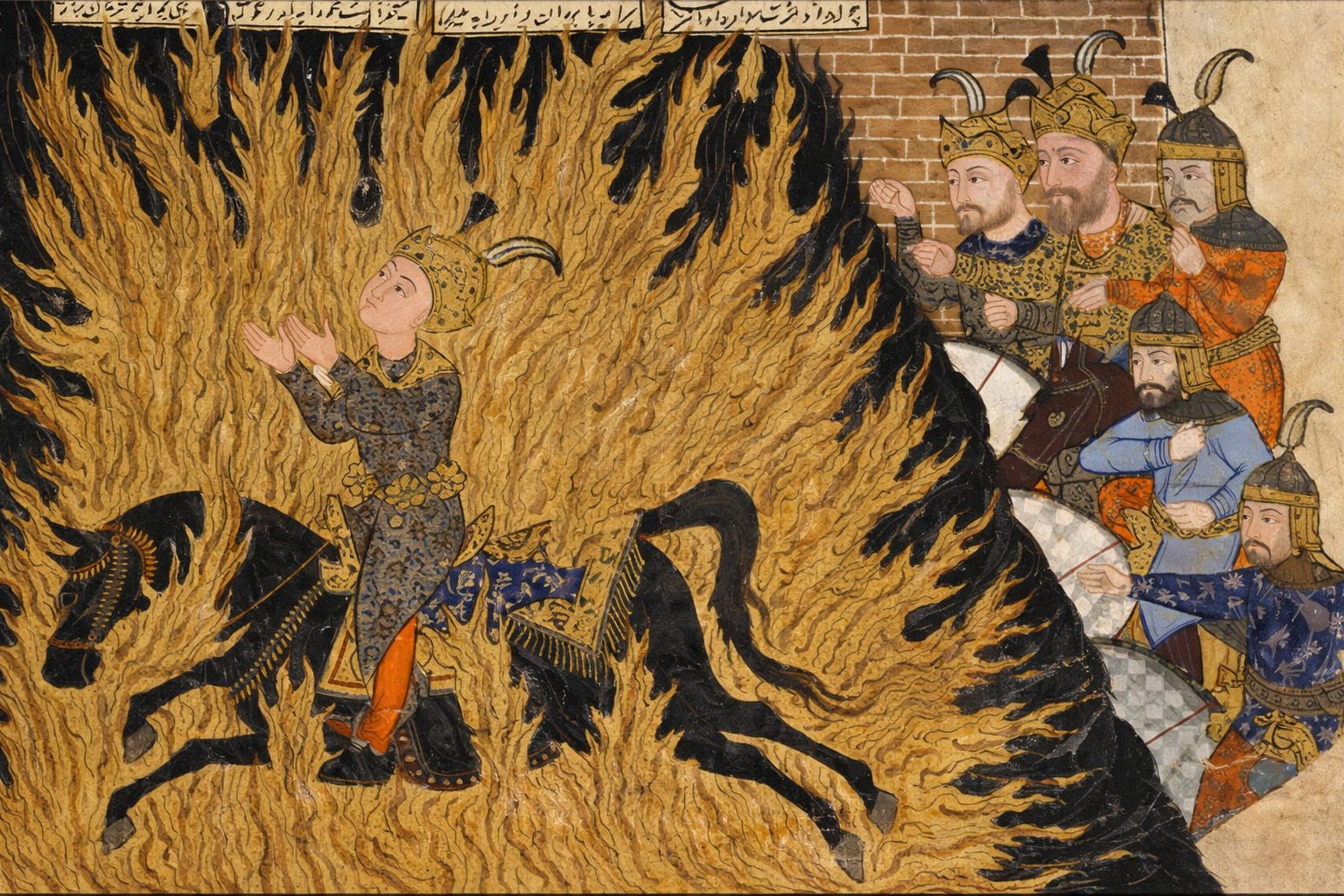
This week the world’s eyes are glued to screens as smoke billows where a fiery missile from the sky hit the compound of of Iran’s supreme leader, Ayatollah Ali Khamenei, in Tehran, reportedly killing him. In the streets, some are rejoycing and some are threatening severe retaliation. Iran is burning once again.
Thousands of years ago the sacred fire of Zoroastrianism, an ancient Persian religion, was ignited and it is still burning today in modern Iran.
Research indicates Iran is one of the countries with the highest rate of self-immolation. Did an act of self-immolation sparked the dry smouldering tinder of oppression into a revolution a few months ago?
On 2 November 2025, 20-year-old student Ahmat Baledi set himself on fire in protest to the demolition of his father’s stall in Ahvaz, Iran, mirroring the December-2010 self-immolation of Tarek el-Tayeb Mohamed Bouazizi, a Muslim Tunisian street vendor, who set himself on fire in Sidi Bouzid, Tunisia, in response to the confiscation of his wares and the harassment and humiliation inflicted on him by a municipal official and her aides. Bouazizi’s self-immolation was the catalyst for the Tunisian revolution and the subsequent Arab Spring against autocratic regimes in 2011. Baledi’s self-immolation sparked several acts of defiance and by 28 December 2025 to mid-January 2026 full scale uprisings and protests broke out in Iran, with an official verified death toll given as 6,126 but an unofficial death toll of thousands more. Scarcely a month after the revolution had been “suppressed” by the State, on Saturday 28 February 2026, Iranians were terrified as US-Israel missiles streaked fire across the mid-morning sky, signaling a call by President Donald Trump that it was time for Iranians to take back their country. This time the smoke did not rise from ancient fire temples, but from targets hit, including a school for girls.
Sacred Fire of Zoroastrianism
In Zoroastrianism fire itself is not worshipped, rather it is considered to be an agent of purity and symbolizes righteousness and truth, because fire burns ever-upward and cannot itself be polluted. Archaeological evidence shows fire rituals were practiced inside fire temples from the Parthian (250 BC) up to the Sassanid period (226–650 AD).
Fires are graded, with the highest being the Atash Behram “Fire of Victory”, and its consecration is the most elaborate, involving the gathering of 16 different “kinds of fire” gathered from 16 different sources, such as lightning, fire from a pyre, fire from trades where a furnace is operated, and fires from the hearths. Each of the fires is then subject to a purification ritual before it joins the others building up to the consecration ceremony, which can take up to a year to accomplish. The fire is considered so sacred and pure that priests wear masks to prevent their breath from contaminating it.
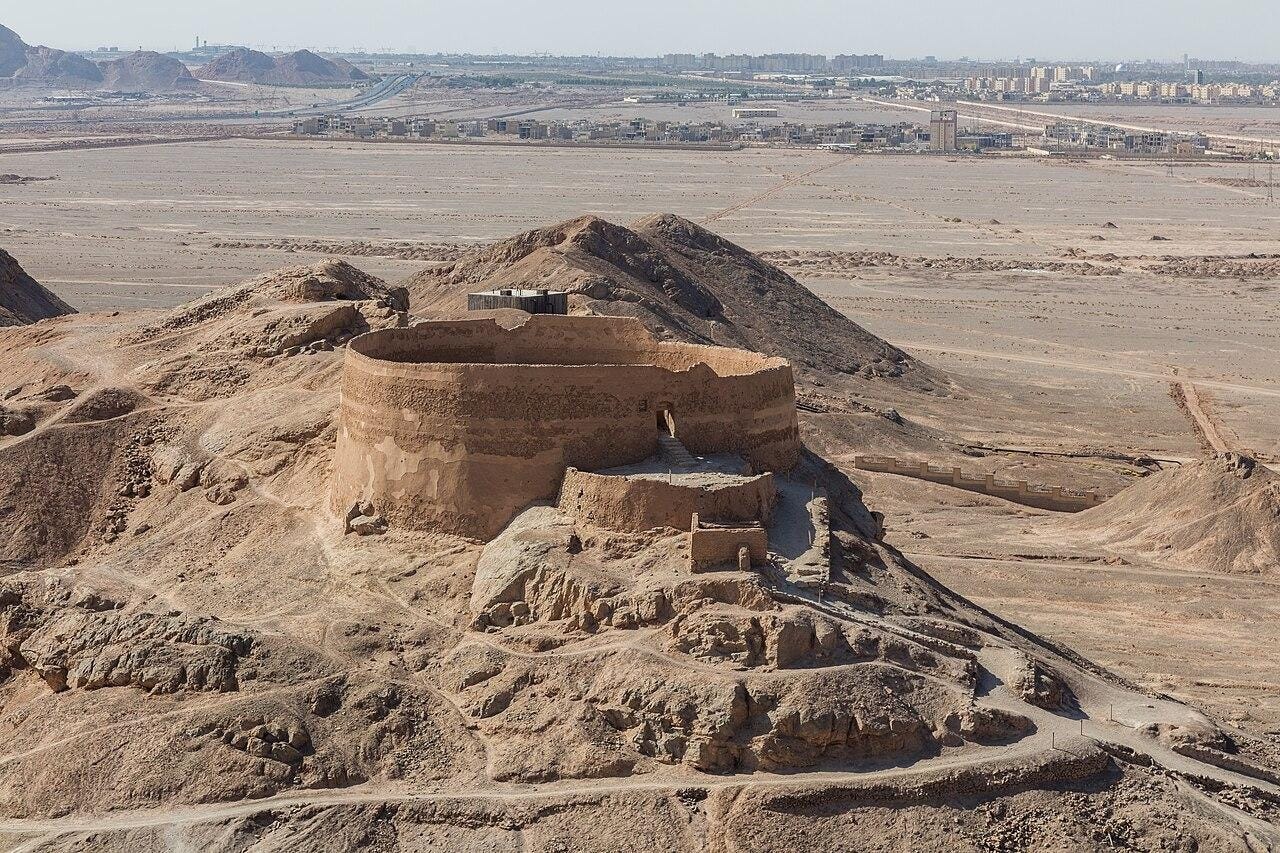

Not only were even priests not allowed to breathe over a fire, but cremation of bodies is strictly forbidden. During later Zoroastrian periods, in order to prevent a decomposing cadaver from contaminating and polluting the sacred elements; earth (zām), water (āpas), and fire (ātar), the bodies were placed at the top of Towers of Silence where they were exposed to the sun and to scavenging birds and necrophagous animals such as wild dogs. A Tower of Silence still exists at Yazd, but it has fallen to ruins.
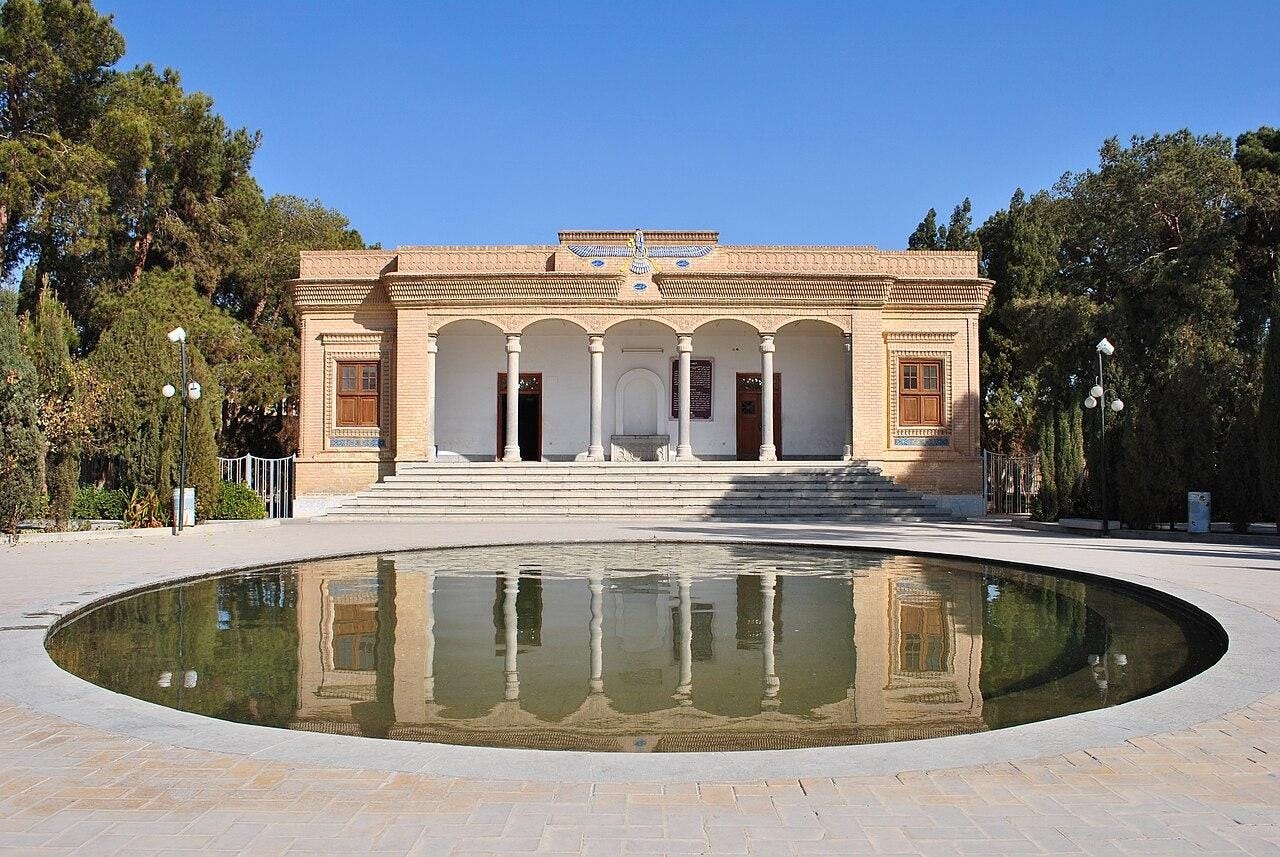

Although several ruins of fire temples still dot Persian archaeological sites, only one Atash Behram temple built in 1935 at Yazd in Iran still hosts an eternal flame that has been burning since 470 AD.
During the Battles of al-Qādisiyyah (636 AD) and of Nihavānd (642 AD) the Sassanid Empire was defeated resulting in the decline of Zoroastrianism. The Zoroastrians were persecuted by the early Muslims and fire temples were destroyed or converted into mosques. Disbanding centuries of the rule under the Caliphates, ancient Persian administrative traditions were integrated into Islamic rule.
The Islamic State of Iran
In 1979 after the Iranian Revolution, the Imperial State of Iran became the Islamic Republic of Iran. The 2,500-year-old monarchy was replaced by a theocratic Islamic state with a Supreme Leader. A few hours after confirmation of Ayatollah Khamenei’s death, on 1 March 2026, an advisory council is being called to name his successor.
Suicide in Iran
Islam forbids suicide as the Holy Quran clearly states: “And kill not yourselves.” (Surah an-Nisa’, Ch.4: V.30) Similarly, the Holy Prophet also condemned suicide in the strongest terms. He once stated: “Whoever commits suicide with a piece of iron will be punished with the same piece of iron in the Hell Fire.” (Sahih al-Bukhari, Kitab al-janaiz, Bab ma ja’a fi qatili n-nafs, Hadith 1363).
Dr Michael Biggs, a lecturer at the department of sociology at the University of Oxford, an expert on self-immolation as a political protest, finds self-immolation is rare in the Muslim world, where a more reported method of people sacrificing their lives has been suicide bombings. In his article Dying Without Killing: Self-Immolations, 1963–2002 Dr Biggs differentiates between the two: “The suicidal attack is an extraordinary weapon of war whereas self-immolation is an extreme form of protest. As an act of protest, it is intended to be public in at least one of two senses: performed in a public place in view of other people, or accompanied by a written letter addressed to political figures or to the general public.”
Because Islam prohibits the cremation of bodies, the idea of people setting themselves on fire is all the more shocking. This echoes the Zoroastrian taboo of desecrating fire with cadavers – either by cremation or self-immolation. Academics debate the question: How prevalent is self-immolation in Iran and is it effective as a political protest? Missiles cremate people in their wake - those fired by Israel USA and the Islamic Republic of Iran.
